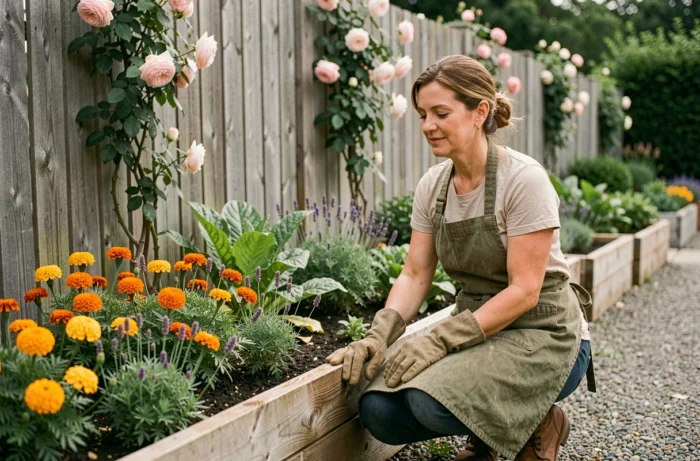
A blooming and productive garden all year round is based on a simple technical principle: the intentional staggering of plant growth cycles. Each plant has a flowering or production window limited to a few weeks. Achieving visual and food continuity over twelve months involves overlapping these windows in the same space, taking into account the soil, exposure, and local climate.
Soil Texture and Exposure: Two Parameters That Determine Everything Else
Before choosing any variety, the soil dictates the rules. Clay soil retains water but compacts when frozen. Sandy soil drains quickly and requires frequent organic inputs. Knowing the dominant texture helps guide the choice of plants towards species that naturally thrive in these conditions, rather than constantly correcting the terrain.
Exposure plays a comparable role. A south-facing flowerbed is suitable for drought-resistant Mediterranean perennials (lavender, gaura, perovskia), while a north-facing bed is better for hostas, ferns, and hellebores. Adapting plants to the terrain avoids half of the failures in the garden.
In addition to this approach, Coco’s Blog gardening tips detail several methods to take advantage of difficult soil without resorting to costly amendments.
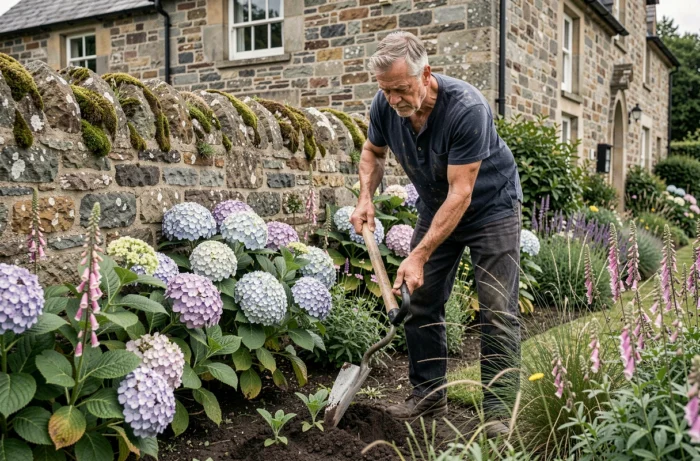
Flowering Calendar: Planning a Seasonal Plant Relay
The concept of flowering relay involves associating plants in the same bed whose flowering periods slightly overlap. The goal is not to have everything blooming simultaneously, but for one species to take over when the previous one fades.
Late Winter Bulbs and Spring Perennials
Snowdrops and crocuses open the season as early as February. They give way to daffodils and botanical tulips in March-April. Planted the previous autumn among clumps of perennial geraniums or lady’s mantle, these bulbs disappear under the rising foliage of the perennials once their flowering is over.
Summer and Late Season in the Vegetable Garden and Flower Bed
Echinaceas, rudbeckias, and shrub salvias cover the period from June to September. To extend into the frost, autumn asters and Japanese anemones bloom from October to November. In the vegetable garden, this relay logic translates into staggered sowing every three weeks for salads, radishes, and beans.
A wall chart or a simple paper calendar remains the best planning tool. Writing down the flowering species and expected harvests for each month helps identify the “gaps” and fill them before the next season.
Maintenance Without Synthetic Plant Protection Products: What the Law Requires
Since January 1, 2019, the Labbé law prohibits individuals from purchasing and using any synthetic plant protection product, including glyphosate. This prohibition remains fully in effect and also covers so-called “garden” chemical herbicides. Since July 1, 2022, the ban extends to professionals working in private residential properties.
Legal alternatives are limited to three categories: biocontrol products, low-risk products, and products allowed in organic farming. In practice, this directs the maintenance of a blooming and productive garden towards mechanical and preventive actions.
- Organic mulching (wood chip, straw, dead leaves) limits the emergence of weeds and maintains soil moisture in summer, which reduces the frequency of watering.
- Manual or thermal weeding replaces herbicides on paths and between rows in the vegetable garden.
- Plant associations (marigolds at the base of tomatoes, nasturtiums along the vegetable garden) disrupt pests without chemical recourse.
This regulatory constraint promotes a more resilient garden in the long term: a living soil, not sterilized by treatments, hosts more microorganisms beneficial to plant growth.
Drought-Resistant Plants: Preparing a Viable Garden in Dry Summers
Extended heat episodes are becoming more frequent in much of Western Europe. Incorporating low-water-requirement species is no longer an aesthetic option; it is a survival condition for the bed between June and September.
The fuchsia magellanica, for example, is documented for its adaptability to water scarcity once well-rooted. Shrub salvias, yarrow, and ornamental grasses (stipa, miscanthus) endure dry periods without additional watering in most draining soils.
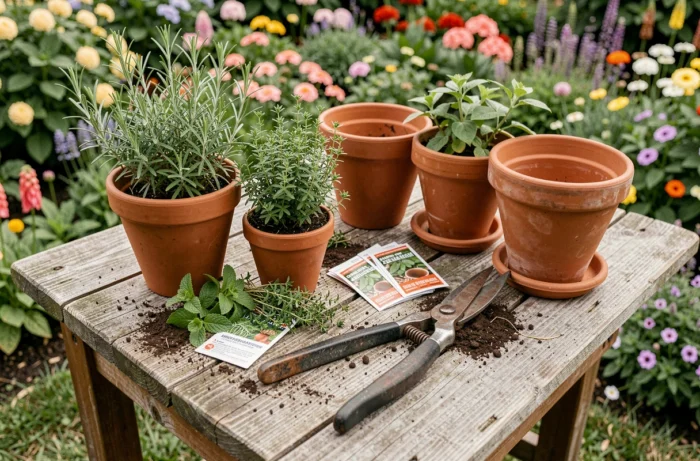
Grouping plants by water needs is the principle of “water zoning.” Water-hungry species (hydrangeas, dahlias) occupy the area closest to the water source or rainwater harvesting system. Mediterranean and grass species go on the periphery, where watering does not reach.
Winter-Flowering Shrubs and Trees
To fill the period from November to February, some shrubs offer reliable flowering even in cold weather. Mahonia produces fragrant yellow clusters in mid-winter. The viburnum (winter viburnum) blooms from December to March. These shrubs structure the garden when the perennials are dormant and welcome the first pollinators of the season.
Productive Vegetable Garden All Year Round: Extending Harvests Beyond Summer
A vegetable garden that produces twelve months a year requires planned sowing starting in January under cover and often neglected autumn-winter crops. Corn salad, spinach, leeks, and kale withstand frost and provide harvests from November to March.
Cold frames or cloches allow for several weeks of gain at the beginning and end of the season without heating. Installing a small Nantes tunnel over a bed of winter lettuce is enough to maintain a production of edible leaves even when temperatures drop below zero.
- Sowing under cover from January-February: tomatoes, peppers, eggplants (transplanting after the last frosts).
- Staggered direct sowing from March to September: radishes, carrots, beans, salads.
- Autumn plantings in August-September: cabbages, leeks, winter spinach, fava beans.
- Winter harvests under cover: corn salad, claytonia, garden cress.
Combining ornamental gardening and vegetable gardening in the same cultivation plan allows for shared mulching, rotation, and beneficial insects. A bed of flowering plants along the vegetable garden attracts pollinators that improve the setting of zucchinis, beans, and fruit trees.
The last variable to master remains human time. A blooming and productive garden all year round does not necessarily require more hours of work, but rather better-distributed interventions: pruning at the end of winter, mulching in spring, sowing in summer for autumn. This shift in habits makes all the difference between a garden that fades in September and a space that remains alive in December.