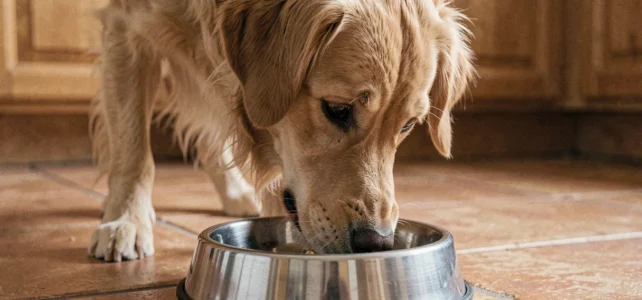
A dog that sniffs its bowl for a long time, takes a step back, then returns hesitantly: we have all observed this behavior at least once. The question then arises naturally, does the dog really detect that the meat in its bowl is spoiled, or is it something else? The answer lies as much in the animal’s olfactory capabilities as in our own verification reflexes, which are often insufficient.
Canine scent and spoiled meat: partial detection, not a shield
It is known that dogs have a much more developed olfactory system than ours. Their number of olfactory receptors far exceeds that of humans, allowing them to detect volatile compounds at extremely low concentrations.
In practice, a dog often perceives the smell of decomposition before we do. It may sniff longer than usual, back away, turn its head, or lick the meat without eating it. These behaviors indicate hesitation related to an unusual smell.
Sniffing a suspicious odor does not protect the dog from ingestion. Many dogs end up eating what they have sniffed, especially if they are greedy or accustomed to a fixed meal schedule. The feeding instinct often overrides caution.
There is also a significant blind spot: meat contaminated with bacteria such as Salmonella or Clostridium does not always smell bad. The absence of a strong odor guarantees nothing. To better understand the mechanisms at play, an article details spoiled meat for dogs on Amazing Pet Place with additional elements on the limits of scent.
Behavioral signs before digestive symptoms: what the dog shows first
We often focus on vomiting and diarrhea to detect food poisoning. These signs appear later, sometimes several hours after ingestion. Before them, the dog sends more discreet signals that are easily missed.
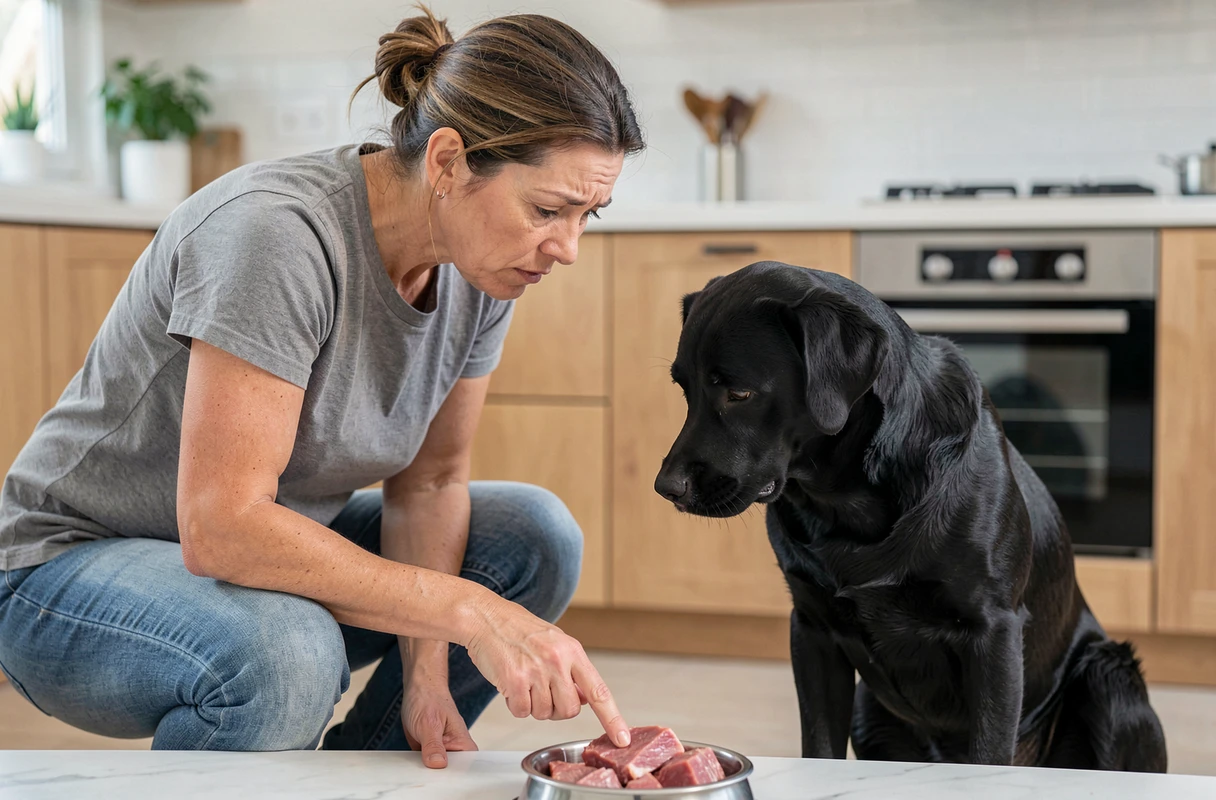
Unusual agitation, sudden refusal to eat, or excessive salivation are among the first clues. A dog that circles, repeatedly licks its lips, or suddenly lies down after sniffing its bowl is expressing discomfort.
Early lethargy is an underestimated signal. A normally lively dog that becomes apathetic within an hour after a suspicious meal deserves immediate attention. Trembling or an unstable gait should also raise alarms, as they may indicate neurological damage related to certain bacterial toxins.
The specific case of canine botulism
If the spoiled meat contains botulinum toxin, neurological signs appear before digestive disturbances. One observes weakness in the hind limbs, difficulty standing, swallowing difficulties, and sometimes ascending paralysis. This clinical picture can deteriorate rapidly and requires emergency veterinary care.
Check the bowl yourself: controls that the dog’s scent cannot replace
Relying solely on the dog’s behavior towards its food means delegating a responsibility it cannot assume. We must inspect what ends up in the bowl ourselves, at every meal if we use fresh meat or homemade rations.
The criteria to systematically check:
- The expiration date on the packaging, including for defrosted meat (meat refrozen after thawing presents an increased risk of bacterial contamination)
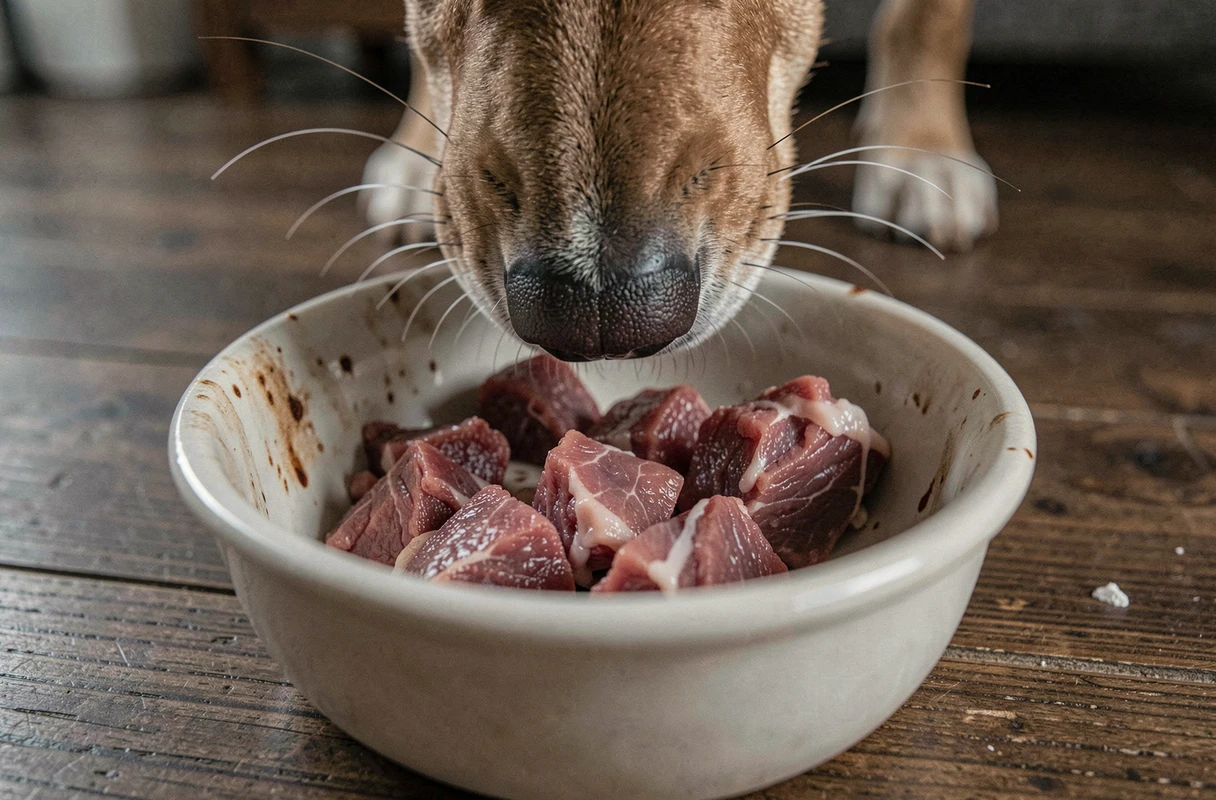
- The visual appearance: grayish or greenish coloration, slimy film on the surface, visible mold, or unusual seepage
- The smell to the human nose: a sour, sulfurous odor, or simply “off” justifies discarding the portion without hesitation
- The cold chain: any meat left at room temperature for more than two hours should be considered suspicious
Meat that appears normal can still be contaminated. Pathogenic bacteria do not always alter the appearance or smell of food. This is why strict preservation takes precedence over sensory inspection.
Veterinary emergency: signals that tolerate no delay
Reports vary on the severity of food poisoning in dogs, but certain signs require immediate consultation, without waiting to observe an evolution.
- Pale or bluish gums (sign of poor oxygenation)
- Blood in stool or vomit
- Seizures or collapse
- Rapid and shallow breathing
- Inability to stand or walk
In the face of these symptoms, contact your veterinarian without attempting to induce vomiting in the dog yourself. Inducing vomiting in an animal with neurological disturbances or seizures worsens the situation.
What can be done while waiting for the veterinarian
Remove the bowl and keep a sample of the suspicious food in an airtight bag. Provide fresh water without forcing the animal to drink. Note the approximate time of the last meal and the first observed signs: this information helps the veterinarian quickly guide their diagnosis.
The dog’s scent often detects a problem, but does not prevent it from eating. The best protection remains human control of the food chain, from purchase to bowl. A dog that hesitates in front of its food deserves that we check what we serve it, rather than leaving it to decide alone.