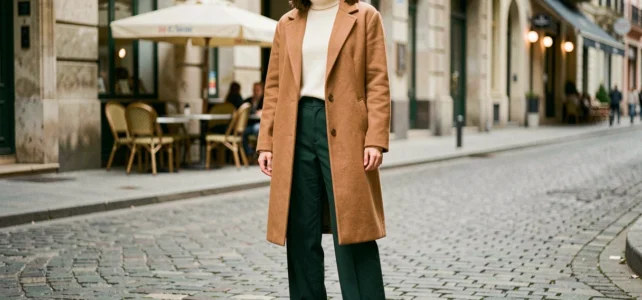
Every new season brings its share of trend lists. This article proposes a different exercise: measuring what really changes in the way to create a unique style this season, by comparing the signals from the runways to shopping behaviors. The autumn 2026 fashion trends are not just about a color palette or a standout cut. They reflect a deeper shift between new, second-hand, and customization.
Runways vs. Real Wardrobe: Where Unique Style is Played Out in Autumn 2026
The autumn 2026 shows highlighted very identifiable pieces. Tagwalk, the runway analysis platform, measured spectacular increases in searches for certain categories. In contrast, shopping habits tell a different story: second-hand is strongly growing among 18-34 year-olds, and artisanal customization is gaining ground.
| Signal | Runway Source | Wardrobe Reality |
|---|---|---|
| Tweed | Search increase of +491% according to Tagwalk | Piece often found in thrift or vintage shops, rarely bought new at entry-level prices |
| Leggings | +308% in searches | Cut already present in second-hand stocks (80s-90s) |
| Bomber | +146% in runway searches | Recycled basic, widely available on C2C platforms like Vinted |
| Animal Print | +94% | Recurring for several seasons, strong resale rotation |
| Pencil Skirt | +55% | Classic wardrobe piece, often already owned |
This table reveals a gap. The most publicized trends correspond to pieces that many wardrobes already contain, or that the second-hand market abundantly supplies. Adopting a unique style this season relies less on buying new items and more on the ability to spot, among what exists, the piece that will make a difference.
To follow the evolution of women’s and men’s wardrobes through the collections, exploring fashion on My Sac! allows you to spot pieces and accessories in line with these movements.
Second-Hand and Personal Style: The Real Differentiation Ground
Refashion data confirms a measurable annual increase in the volume of second-hand clothing consumed in France. Vinted, now the leading C2C platform in Europe, shows continuous growth in its transactions. The mix of new and second-hand has become the norm, not the exception.
The direct consequence on style: the richest ground for a singular look is no longer the new collection, but the continuous flow of resold pieces. Filters by era, material, or rarity allow you to find a 90s military bomber or a second-hand Irish tweed that no one else will wear.
Why Second-Hand Fosters a Distinctive Autumn Look
- Vintage pieces carry manufacturing details (linings, buttons, finishes) absent from current mass production
- The available stock varies daily, making each find inherently limited
- The lower price compared to new allows for experimenting with cuts or colors (leggings, aubergine, forest green) without financial risk
On the other hand, second-hand requires a sharper eye. Without the staging of a brand lookbook, one must know how to assess a cut, a material, a condition. It is precisely this skill that produces a personal style rather than a seasonal uniform.
Autumn 2026 Colors: What Runways and the Market Agree to Show
The palettes presented by Mugler, Balenciaga, Loewe, and Chloé converge around a few color families. Brown, green, and aubergine dominate the autumn proposals. These shades share a common point: they easily combine with each other and with neutral basics.
Brown in a total look remains the safest bet. Paired with green, it creates an earthy and structured effect without particular effort. Aubergine, worn by Mugler and Ferragamo, offers an alternative to black for strong pieces (coat, long dress).
Customization and Color: The Factor that Separates Trend from Style
Color is the most accessible lever for distinction. Wearing forest green when the majority opts for classic black requires no technical investment, just a decision. A unique style often arises from a deliberate chromatic choice rather than a spectacular piece.
Market data on customization confirms this intuition. Bespoke and custom (dyeing, embroidery, print on demand) are progressing on a European scale. Consumers are wary of algorithmic customization offered by large platforms but willingly adopt active approaches: workshop alterations, DIY customization, and turning to small local creators.
Materials and Cuts with High Potential for Uniqueness this Season
Beyond color, three categories of materials and cuts stand out from the autumn 2026 shows with real differentiation potential.
- Lace worn in layering (over a turtleneck, under a blazer) transforms a classic outfit without adding volume
- Soft leather, used in shirts or midi skirts, replaces the rigid leather of previous seasons and is better suited for everyday use
- Structured shoulder pads, seen at Mugler and in tailored collections, reshape the silhouette in one move
Faux fur is also making a comeback, but its potential for uniqueness heavily depends on the cut. A short textured faux fur vest creates a different effect than a long coat already seen on all fast fashion platforms.
Denim remains omnipresent. The difference lies in the wash and cut: a slightly flared straight jean in raw denim immediately stands out from a standard washed skinny. Plaids are also returning in wider proportions, reminiscent of British wardrobes from the 70s.
Ultimately, adopting a unique style this season relies on three concrete actions: leveraging second-hand stock for key pieces (tweed, bomber, leggings), choosing a coherent color palette around strong autumn shades, and investing in one or two visually impactful materials rather than accumulating interchangeable basics. The rarity of the piece matters more than its novelty.