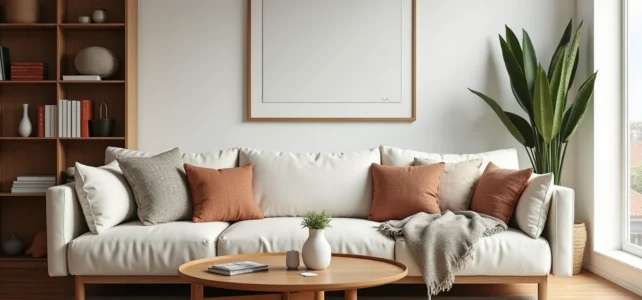
A sofa too large for the living room, a light fixture that illuminates the wall instead of the table, cushions bought in a set that match nothing: we have all experienced at least one of these mistakes. Decorating your interior with style and originality doesn’t start in a magazine, but in the face of a concrete constraint.
A long room, a low ceiling, a tight budget. It’s precisely these constraints that push us to make more personal, bolder choices, and ultimately more successful ones.
Ceilings and floors as interior decoration surfaces
When wall space is limited (built-in bookshelves, large windows, open kitchens), there are two often-overlooked surfaces: the ceiling and the floor. Recent trends confirm that these areas are becoming full-fledged expression grounds, featuring bold colors, moldings, or graphic patterns.
Specifically, painting a ceiling in a strong shade visually brings the volumes closer and adds character to a neutral room. A deep green ceiling in a bedroom, a terracotta in a narrow entryway: the effect is immediate without touching the furniture. The floor follows the same logic. A geometric patterned tile in a dining room or herringbone parquet in a hallway restructures the space without adding furniture.
You can find ideas of this type, developed room by room, on https://www.soustouslesangles.fr/, which approaches decoration from various practical angles.
Opinions vary on this point: a dark ceiling in a small room can either overwhelm it or create a cocoon effect. The key is to test with a painted sample on a rigid cardboard, taped to the ceiling for two or three days, before committing.
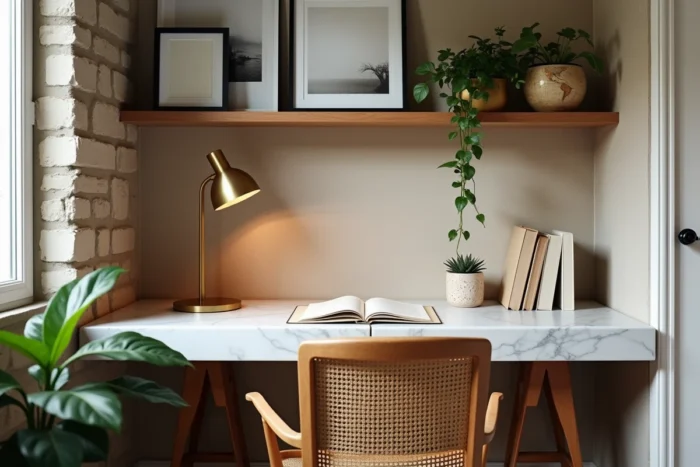
Sculptural lighting and furniture as focal points
Lighting is often chosen last, once the budget is nearly exhausted. This is a sequencing mistake. A sculptural light fixture structures the ambiance of a room just as much as a main piece of furniture.
Oversized pendants above a dining table, wall sconces with organic shapes in a hallway, arc floor lamps in a reading corner: these elements do not just provide light. They create focal points that direct the gaze and organize visual flow.
Choosing a light fixture before the rest of the furniture
When furnishing a living room or dining room, starting with the central light fixture helps to establish the visual height, the dominant style, and the desired light intensity. The sofa, the table, and decorative objects then align naturally. This approach prevents ending up with a pendant that is too discreet and gets lost in an already busy space.
For an original interior, you can also mix light fixtures of different styles in the same room: a brass pendant above the table, a handmade ceramic lamp on the sideboard, a black metal floor lamp near the armchair. The unity comes from the light temperature (warm and consistent), not from the design of the objects themselves.
Chrome, amber glass, and dark wood for a retro-futuristic style
General decoration guides talk a lot about colors and textiles, but less about material combinations that give a true character to an interior. A specific trio stands out to create an atmosphere that is both warm and assertive:
- Chrome on chair legs, coffee tables, or floor lamps, for a clean and contemporary effect that reflects light in small spaces
- Amber glass (vases, carafes, accent lamps) that diffuses warm light and adds a retro touch without falling into pastiche
- Dark wood (walnut, mahogany) marking a return to refined atmospheres, countering the light Scandinavian oak that has dominated for years
This mix works particularly well in a dining room or office. Chrome brings modernity, amber glass softens, and dark wood anchors. You achieve a bold design without needing to repaint the walls or change the flooring.
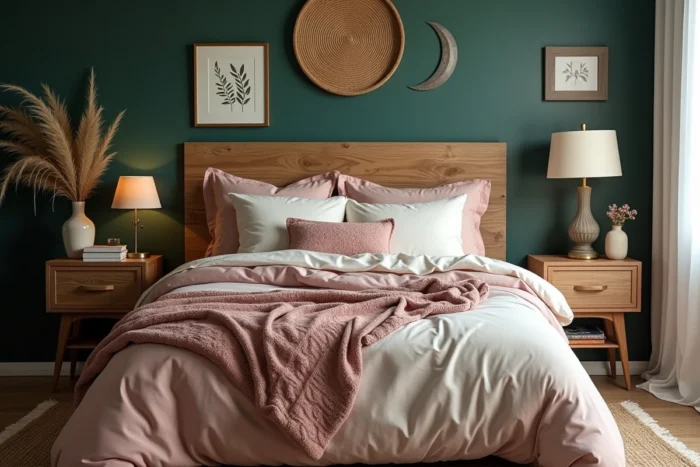
Balancing materials to avoid a showroom effect
The temptation is to coordinate everything. Three chrome objects, two amber vases, a complete walnut table. The result then resembles a shop window. Limiting each material to two or three elements per room maintains balance. The rest of the furniture and objects can remain neutral (linen, off-white, light gray) to allow the whole to breathe.
Local craftsmanship and handmade pieces in decoration
Accumulating mass-produced decorative objects gives an interior a “pretty” but interchangeable look. What creates originality is the introduction of pieces with a traceable history: a pottery piece bought from a potter, a handwoven textile, a piece of furniture restored by a local artisan.
This approach, sometimes called “slow decor,” does not require a higher budget. It requires time. Finding an artisan market, visiting a workshop, hunting in a flea market takes more time than an online order, but the result looks unlike any other interior.
- A signed stoneware vase effectively replaces three industrial vases lined up on a shelf
- A hand-dyed linen cushion brings a texture that polyester cannot replicate
- A small vintage side table that has been refinished becomes a conversation piece, not just storage
Each handmade piece introduces an irregularity that humanizes the space. It is precisely this controlled imperfection that distinguishes a thoughtfully designed interior from a “decorated” one.
The most successful interior design one can observe is never the one that applies all the trends at once. It is the one that retains two or three, pushes them deeply, and leaves the rest understated. A painted ceiling, a well-chosen sculptural light fixture, a few artisanal objects: sometimes, three decisions are enough to completely transform the ambiance of a home.