Preparing soup with a NutriBullet is not just about throwing vegetables into a bowl and pressing a button. The choice of model determines everything: safety, texture, preparation time. Let’s take stock of what this device really changes in the kitchen.
Sealed cups or large pitcher: the trap to know before buying
Not all NutriBullets are equal for soup. Compact models with small sealed cups (600 series, Pro 900, Pro 1000, Pro+ 1200, Ultra) should never receive hot liquids. The reason is mechanical: without ventilation, steam creates overpressure that can cause the container to break during blending.
Models suitable for soups are those equipped with a large pitcher with a vented lid. This category includes the NutriBullet Blender Combo, the Power Core, and the SmartSense. The ventilation allows steam to escape and prevents any dangerous pressure buildup.
This distinction between cups and vented pitchers is rarely highlighted in general guides on heating blenders. Yet it is what determines whether we can truly take advantage of the benefits of the heating NutriBullet for soup or risk a kitchen accident.
Heating NutriBullet and soup: what the device does better than a pot and a blender
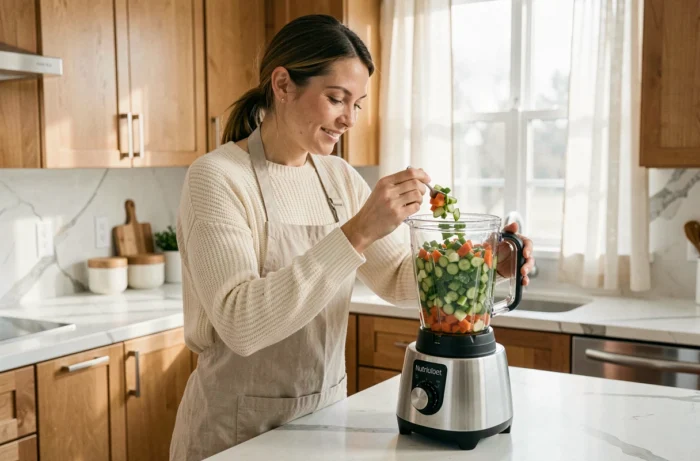
The classic method is to cook the vegetables in a pot, then take out the immersion blender or transfer to a cold blender. With a NutriBullet with a large pitcher, we eliminate a step and gain consistency in texture.
Texture and blending power
The motor power of full-size models allows for a smooth velouté in just a few seconds, even with fibrous vegetables like celeriac or leeks. A classic immersion blender often leaves chunks, especially in soups made with squash or sweet potatoes.
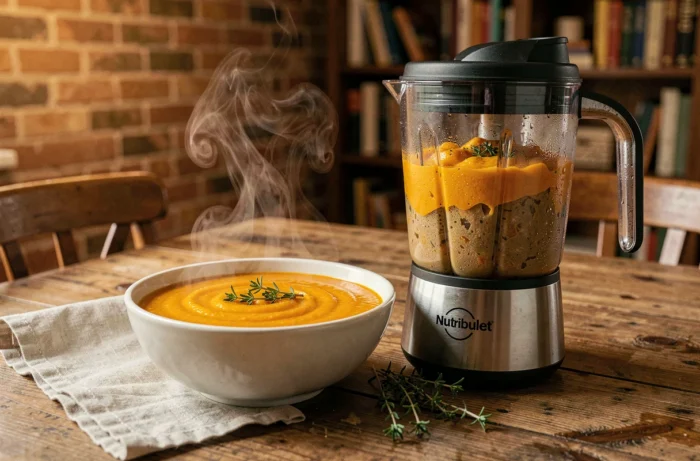
A homogeneous velouté without extra effort is the concrete gain. We pour in the precooked vegetables, start the cycle, and the soup is ready to serve.
Time-saving and reduced dishwashing
Fewer transfers between containers mean less dishwashing. For weeknight dinners when we want a quick soup, this is a real practical advantage. The pitcher serves as both a blending container and sometimes a direct serving vessel at the table.
Concrete limitations of the NutriBullet for hot soup
We won’t present the device as an all-in-one robot without nuance. Several constraints deserve to be clearly stated.
- No integrated cooking function on standard NutriBullet models: unlike a Moulinex or a dedicated heating blender, vegetables must be cooked separately before blending. The device does not heat food; it blends already hot ingredients.
- The capacity of the pitcher limits portions. For a large family, we will likely need to blend in two batches, which reduces the time-saving.
- Feedback varies on the durability of the blades with frequent soup use: hard vegetables put more strain on the motor than fruit smoothies.
This last point does not disqualify the device, but it should be noted that a NutriBullet used daily for thick soups does not have the same lifespan as a professional blender.
Safety and warnings: what NutriBullet had to correct
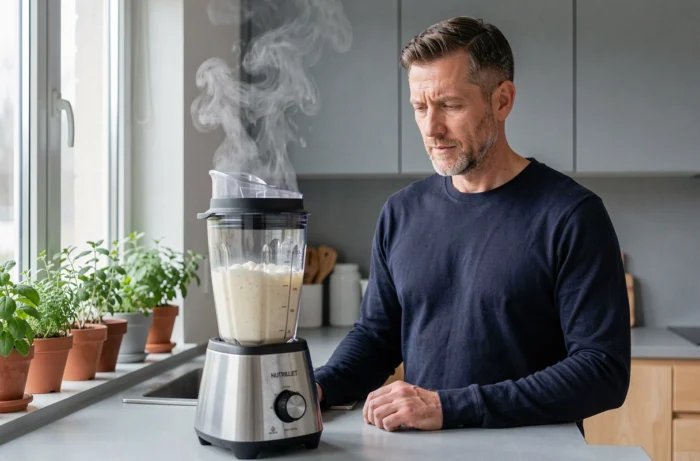
The brand has faced reports related to accidents with hot liquids in non-vented cups. Following these incidents, NutriBullet agreed to add more visible warnings on packaging regarding the prohibition of using hot ingredients in sealed containers.
This is not trivial. Before using a NutriBullet for soup, we check two things:
- The model has a pitcher with a vented lid (not a twist cup).
- The fill level does not exceed the maximum line indicated, especially with hot liquids that increase in volume.
- We let the soup cool slightly if it comes directly from boiling, even with a vented pitcher.
Respecting the maximum fill line is not generic advice: it is the primary cause of overflow reported by users.
Which NutriBullet to choose for regularly preparing soups
To summarize the concrete criteria for soup use, three elements matter more than the rest.
The first is the mandatory vented pitcher. Without it, hot soup is not possible. Thus, we eliminate the entire range of individual cups.
The second criterion is motor power. For cooked vegetables, most full-size models are sufficient. For soups with tougher ingredients (chestnuts, root vegetables), we prefer versions with the most powerful motor in the range.
The third criterion concerns cleaning. A removable pitcher that is dishwasher-safe changes the game when making soup several times a week. A bowl that is difficult to disassemble ultimately discourages regular use.
The NutriBullet Blender Combo ticks these three boxes for most soup uses. The SmartSense adds automatic content detection, but the extra cost is only justified if the device is also used for other preparations (smoothies, sauces, purées).
A well-chosen NutriBullet truly simplifies the preparation of homemade soups on a daily basis, provided we do not confuse a high-performance blender with a cooking device. Cooking still needs to be done separately, and this detail separates this device from heating blenders in the strict sense.