
Booking a flight to a distant destination is no longer enough to give meaning to a trip. More and more travelers are looking for options that combine discovery, local immersion, and respect for the territories crossed. Offers for so-called “alternative” travel are structured around concrete principles: multimodal itineraries, certified accommodations, and extended stays rather than express tours. Understanding these mechanisms allows one to choose an offer that truly meets their expectations.
Multimodal itineraries: train, boat, and bike as the backbone of the journey
Have you noticed that some tours now offer routes without any internal flights? This choice is not just ecological. It transforms the rhythm of travel.
A multimodal itinerary combines several modes of transport: train, boat, bike, and local buses alternate to connect the stages. The journey becomes part of the stay, not a dead time between two destinations. The landscapes unfold at a speed that allows for observation, and stops at small train stations or secondary ports open up encounters that airplanes do not allow.
Lonely Planet highlights structured combinations around slow travel, with “flight-free” routes that organize logistics for the traveler. By browsing the offers from Voyage Slouk, one can find this logic of circuits designed around land and sea transport, with stops calibrated to allow time at each layover.
Staying longer in a country reduces the transport footprint while deepening the experience. A three-week circuit in Vietnam by train and bike is nothing like a whirlwind tour of five cities in ten days. The cost per day decreases, and the quality of encounters increases.

Sustainable accommodation labels: how to spot a reliable offer
The term “eco-responsible” appears on many hotel listings. But not all establishments are equal. Why this ambiguity? Because the term is not governed by any unique legal definition.
To distinguish a genuinely committed accommodation from a mere marketing argument, verifiable labels remain the most solid reference. Several certifications exist and operate on regular audits:
- Green Key: an international label that covers water, energy, waste management, and customer awareness. Present in several dozen countries.
- EU Ecolabel: a European certification supported by the Commission, with measurable criteria throughout the accommodation’s life cycle.
- EarthCheck: a scientific benchmarking program used by hotels, resorts, and entire destinations to track their environmental performance.
Some booking platforms now integrate “sustainable travel” filters that highlight certified establishments. Checking for a label before booking takes a few seconds and changes the nature of the stay.
What the label doesn’t always say
A certified hotel may excel in water management but offer quad excursions in fragile areas. The label covers the accommodation, rarely all associated activities. Asking the operator directly remains useful.
Solidarity tourism and local immersion circuits
Solidarity tourism differs from sustainable tourism by a specific angle: the redistribution of value to local communities. The traveler does not visit a village; they participate in a project co-constructed with its inhabitants.
Concretely, this can take the form of a homestay in West Africa where a defined portion of the price funds an agricultural cooperative. Or a circuit in Thailand where guides are trained and paid by a local association, not by a Europe-based tour operator.

This model relies on the co-construction of stays. Host communities participate in defining activities, itineraries, and visiting rules. This approach avoids the “human zoo” syndrome where groups of tourists photograph a way of life without contributing to it.
Adventure and immersion do not oppose each other
A solidarity circuit in Cambodia may include a day of trekking in the jungle, followed by a cooking workshop with a family. Adventure and immersion nourish each other. Travelers seeking strong experiences find in these formats a physical and human engagement that classic tours do not offer.
Bicycle travel offers and slow road trips: two formats on the rise
Bicycle travel appeals well beyond seasoned cyclists. Operators offer circuits with complete logistical support: luggage transported from stage to stage, accommodations reserved, GPS tracks provided. The traveler pedals with a light bag and discovers the landscapes at their own pace.
In Europe, EuroVelo and national greenways allow for crossing entire regions without using high-traffic roads. Outside the continent, Vietnam, Thailand, or Morocco offer bike circuits suitable for various levels.
The slow road trip follows a similar logic: fewer kilometers per day, more time at each stop. Rather than ticking off ten cities in two weeks, the traveler settles for three or four days in a region, explores on foot or by local transport, and departs when they have exhausted their curiosity.
These formats share a common point: they place the journey at the center of the experience. The destination is no longer the sole objective; the path to get there is part of it.
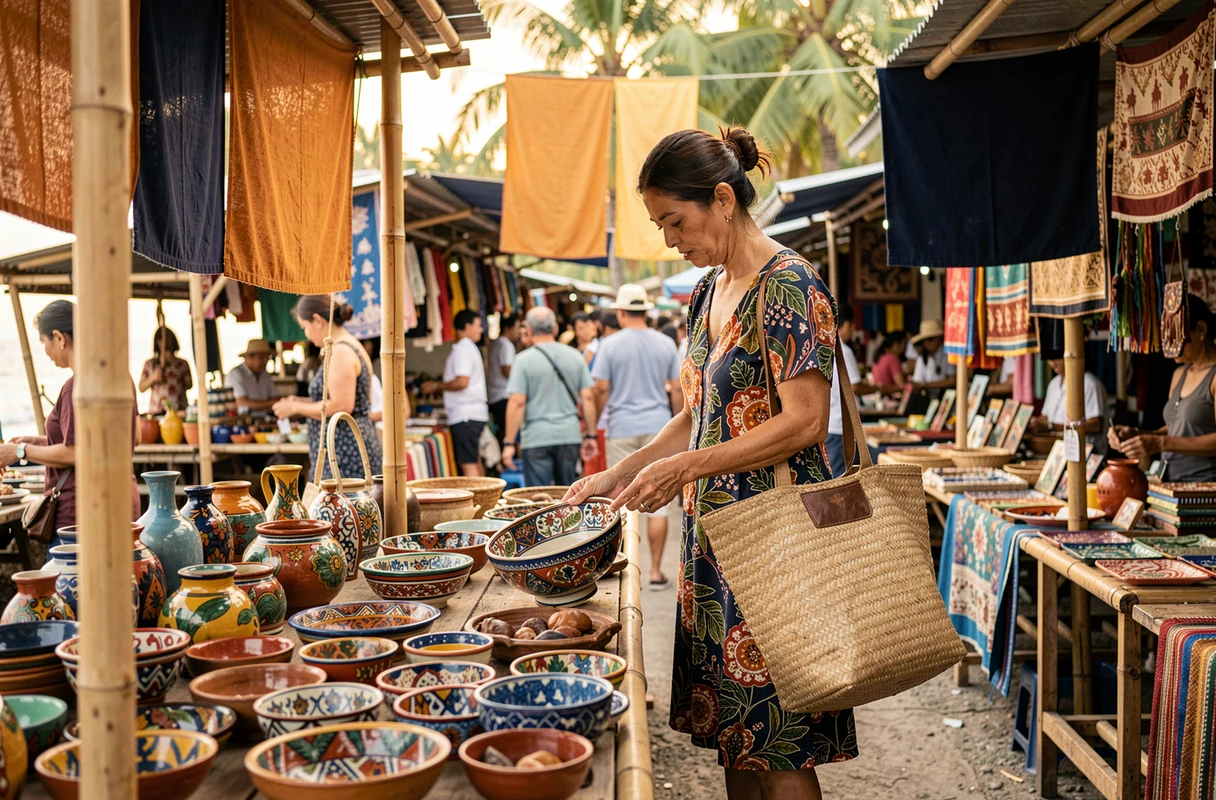
Choosing an “alternative” travel offer means balancing depth and comprehensiveness. A circuit that covers less ground but delves into each stop leaves clearer memories than a postcard overview. Labels, multimodality, and co-construction with local communities are three concrete criteria to filter offers and depart with a clear idea of what the journey will truly bring.