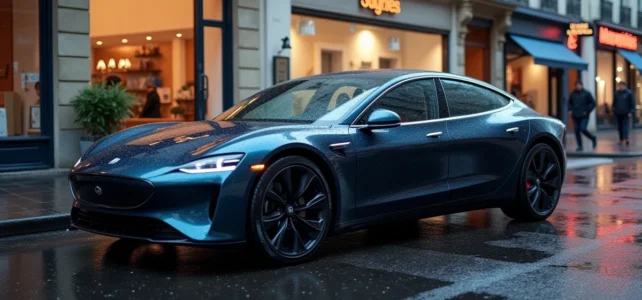
When looking for a new car in 2026, the technical sheet is no longer enough. With new European regulatory requirements, the rise of electric powertrains, and the arrival of software-driven vehicles, the automotive market is transforming at a pace that is hard to keep up with.
Sorting through real advancements and marketing noise requires looking at sales figures, current standards, and models that truly change the game on a daily basis.
GSR2 Regulation: What Your Next New Car Comes With as Standard
Since July 7, 2026, the GSR2 safety package applies to all new vehicles sold in the European Union. Specifically, we are talking about two features that modify the driving experience from the moment you take the wheel: driver monitoring via camera and enhanced autonomous emergency braking.
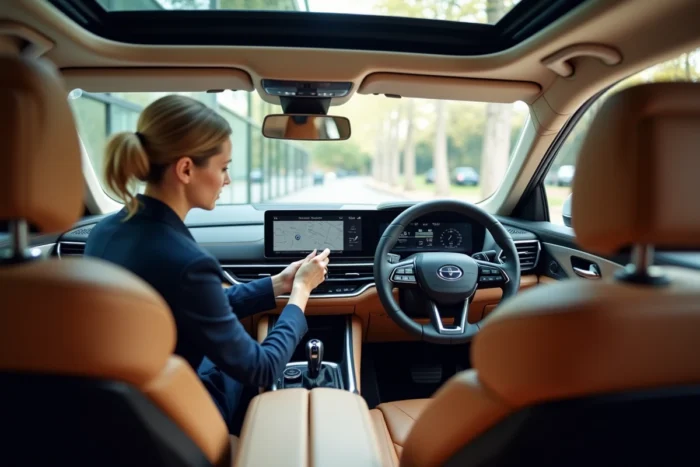
The interior camera monitors the driver’s attention in real-time. If you look away for too long or if signs of drowsiness are detected, the system emits an audible and visual alert. Feedback on this point varies: some drivers find the device intrusive, while others forget about it after a few days.
The autonomous emergency braking now reacts to pedestrians and cyclists in a wider range of situations than before. For those following automotive news on Media Libre’s automotive media, these requirements are not a surprise, but they change the way we evaluate a test drive: we no longer only compare power or comfort, but also assess the calibration of these aids.
For used car buyers, the distinction is clear. A vehicle registered before July 2026 does not come equipped with these systems in their mandatory version. Checking the homologation date becomes a reflex to adopt before any transaction.
French Automotive Market in Summer 2026: The Electric Shift in Numbers
In July 2026, the French automotive market grew by 9%. What stands out is the source of this growth: registrations of electric vehicles surged by 127%, reaching 35% of monthly registrations with 44,378 units sold.
This is no longer a niche segment. More than one in three new cars sold in France is electric. The trend can be explained by the convergence of several factors: an expanded offering (electric SUVs, city cars, sedans), a gradual decrease in entry prices, and a European regulatory timeline that pushes manufacturers to sell their zero-emission stocks.
For Belgian motorists observing the French market, this dynamic has direct consequences. Popular electric models in France often arrive at dealerships in Belgium a few weeks later. Prices vary according to local taxation, but availability depends on the same supply chains.
What These Figures Change in the Used Car Market
With such an influx of new electric vehicles, the used car market will quickly become denser. We are already starting to see electric models that are two or three years old with moderate mileage at significantly lower prices than new. The key point to watch remains the residual battery capacity, which affects resale value.
Software-Defined Vehicle: Renault SDV and the End of the Fixed Car
Renault announces that its SDV (Software-Defined Vehicle) will be the first European vehicle of this type marketed in 2026. The principle: an automotive operating system based on Android, developed in partnership with Google, that allows for updating most features remotely (OTA, for Over-The-Air).
On the ground, this means you no longer buy a car with features set in stone. The driver interface, suspension settings, driving aids, and even some engine parameters can evolve after purchase, just like a smartphone receives updates.
- Software security patches arrive without a trip to the dealership, reducing physical recalls.
- New functions can be activated (or sold) after purchase, changing the concept of the vehicle’s residual value.
- Remote diagnostics allow the manufacturer to identify a fault before the driver notices it.
The question every buyer should ask: what software support duration does the manufacturer guarantee? A software-defined vehicle without updates becomes obsolete faster than a traditional model. Renault has not yet communicated a firm duration, and this is an angle to watch in the coming months.
Citroën 2CV Electric and the Return of Icons: Sustainable Trend or Marketing Nostalgia
Citroën has officially announced the return of the 2CV in electric version on May 21, 2026. The model plays on nostalgic fibers with a retro design, but the technical base is contemporary: electric platform, onboard connectivity, driving aids compliant with GSR2 standards.
We observe an underlying trend among several automotive brands: resurrecting an iconic name to launch an electric model. Alpine is doing this with the electric A110, presented at Goodwood on a new platform dedicated to zero-emission sports cars. The commercial objective is clear: reduce resistance to change by associating electric vehicles with models that have marked history.
For the buyer, the question remains pragmatic. An historic badge does not change the actual range, insurance cost, or the availability of charging networks near home. The name on the hood does not replace a road test.
Three Criteria to Follow Automotive Innovations Without Getting Lost
In the face of the volume of announcements, concepts, and promises, we need a filter. Here are three questions we systematically ask before considering an innovation as truly relevant:
- Is the system already delivered in series on a marketed model, or is it a prototype presented at a show? The difference between a concept and a real-world application is often several years.
- Is the technology covered by a regulatory obligation (like GSR2) or does it depend on the manufacturer’s goodwill? Mandatory equipment is becoming widespread, while options remain confidential.
- Is there real-world feedback, not just a press release? Independent tests, user forums, and real consumption data are worth more than an optimistic technical sheet.
The automotive market of 2026 rewards those who read beyond the headline. GSR2 standards redefine the minimum safety standard, the share of electric vehicles exceeds a third of sales in France, and software-defined vehicles introduce a business model where the car evolves after purchase. These are facts, not projections. The rest is road testing.