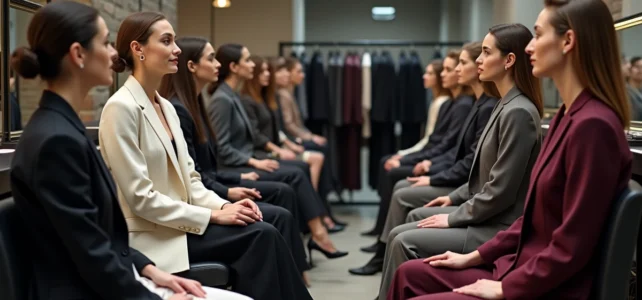
A fashion show rarely lasts more than fifteen minutes, but it involves a backstage casting that can vary in size from a simple to a quintuple number depending on the format of the show. Asking about the average number of models per show is akin to searching for a norm in an industry that operates without a numerical standard. Specialized platforms like Tagwalk document the looks presented, not the models engaged, which complicates any attempt at a global average.
Presented looks and cast models: why the count never matches
The most common confusion is equating the number of walks on the runway with the number of people who walk. A haute couture show can showcase several dozen silhouettes, but the same model often wears two to four outfits during a single show. Therefore, the number of looks announced by a house does not reflect the actual size of the casting.
This rapid change mechanism, managed by backstage dressers, allows brands to limit the number of models while multiplying the silhouettes. To estimate the number of models in a fashion show, one must cross-reference the list of looks with the casting sheets, a data point that houses rarely publish.
Ready-to-wear shows generally operate with a broader casting than haute couture, because outfit changes are less frequent. In contrast, shows by young designers or independent brands reduce their casting for obvious budgetary reasons.
Fashion show format and casting size: the determining variables
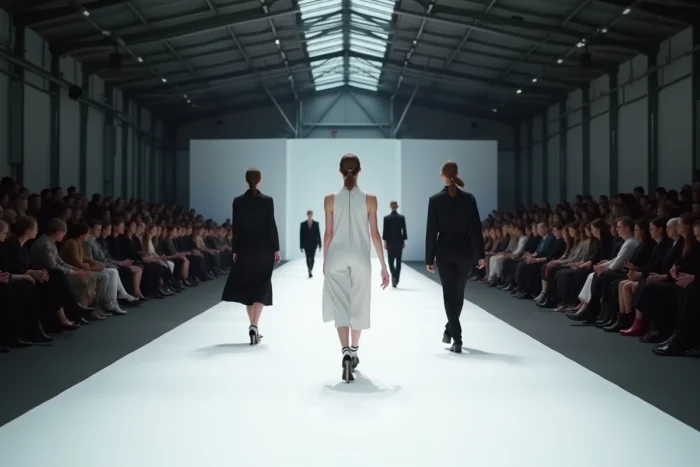
Talking about an average without specifying the type of show makes little sense. A show listed on the official Paris Fashion Week calendar does not operate under the same constraints as a regional show or an educational event organized by a fashion school.
Shows from major houses during Fashion Weeks
Established houses mobilize between twenty and sixty models depending on the scale of the collection and the desired staging. The more spectacular the scenography, the larger the casting, sometimes beyond professional models. Some brands now include celebrities, artists, or personalities from social media in their lineup.
This diversification of the casting, visible in recent seasons, transforms the composition of the show. The selection of participants becomes a communication lever as much as a need to present the clothing. The “classic” runway model is no longer the only profile sought.
Independent designer shows and local events
Emerging designers, regional fashion festivals, or local cultural events work with smaller castings, sometimes fewer than ten models. The number then depends on the stage space, available budget, and visibility goals. Festivals in Central Africa or associative shows in France operate with non-professional profiles recruited locally.
Educational shows in fashion schools
Fashion schools organize their own end-of-year shows with dedicated castings. These events form a distinct pool from professional agencies. The number of models varies according to the graduating classes and the number of creations presented by the students.
Production budget and model compensation: the direct link to casting size
The cost of a show directly impacts the number of models engaged. Caroline Lefrere, founder of the Hermana Agency specializing in show production, states that below 50,000 euros, producing a show is nearly impossible. Some shows reach budgets in the millions of euros.
The compensation of models represents a significant item in this budget. The larger the casting, the higher the bill, which forces brands to make trade-offs between:
- The number of models engaged and the number of outfit changes per model, to cover the entire collection
- The inclusion of unpaid profiles at the standard rate (celebrities paid in visibility, beginner models, students from schools)
- The duration of the show itself, which determines the number of necessary walks and thus the minimum casting
An independent designer presenting their first collection off-schedule does not have the same financial leverage as a house on the official calendar. The budget remains the primary factor in sizing the casting, far ahead of artistic choices.
Hybrid casting and evolving modeling: what recent shows reveal
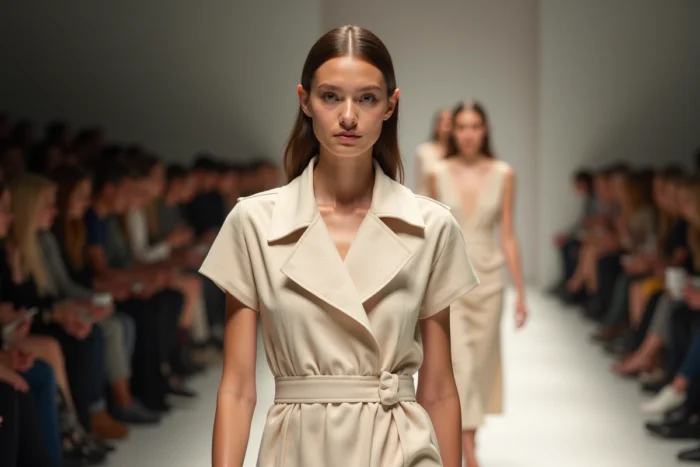
The boundary between professional models and show participants is blurring. Major houses now recruit diverse profiles to build a narrative around the show. An artist walking the runway is not counted the same way as an agency model in casting data, making comparisons between shows even more precarious.
Model agencies like Elite continue to provide the backbone of castings for Fashion Weeks. They organize regular scouting in several cities, including outside fashion capitals. The profession of runway model remains structured by agencies, even as profiles diversify significantly.
The available data does not allow for a reliable average across all formats. Field reports vary on this point depending on whether one asks a Parisian casting director or a regional festival organizer. What is observed is a wide spectrum: from a handful of models for an associative show to several dozen for a Fashion Week show.
Why no official statistics exist on the number of models per show
Fashion monitoring tools like Tagwalk catalog looks, brands, designers, but not the exact number of models per show. This gap is explained by the very nature of the industry:
- Houses do not systematically communicate their complete casting list
- A model walking for several brands during the same Fashion Week appears in multiple counts without consolidation
- Hybrid formats (static presentation, video, physical show) blur the very definition of “participating in a show”
- Events outside the official calendar (local, educational, associative shows) are simply not recorded
No industry database publishes an official average on the number of models per show. Any global estimate relies on partial observations, varying from one season and format to another. The range most often cited by casting professionals for Fashion Week shows is between twenty and sixty models, but this indication covers only a fraction of the total number of shows organized each year worldwide.