
Applying a gloss and feeling an immediate tingling sensation on the lips is a common experience, especially with so-called plumping formulas. This sensation, often presented as a sign of effectiveness by cosmetic brands, is based on skin irritation mechanisms, where the line between a problematic reaction remains blurred. The topic deserves to be examined beyond marketing promises, focusing on what these tingles actually signify at the level of the lip skin.
Fragrances and Flavors in Gloss: The Underestimated Irritants
Most discussions around tingling glosses focus on menthol, capsicum (derived from chili), or hyaluronic acid. These active ingredients do indeed cause local vasodilation or micro-irritation that gives an impression of volume. Their role is documented and generally known to informed consumers.
In contrast, recent literature points to another culprit, much less publicized: fragrances and flavors are the primary culprits of contact reactions on the lips. Redness, tingling, small bumps: these symptoms are frequently triggered by complex aromatic compositions found in nearly all glosses on the market, including those that do not claim any plumping effect.
An article detailing the dangers of a tingling gloss helps to better understand the diversity of the ingredients involved. The problem goes beyond just menthol: a synthetic fragrance or a fruit flavor can be enough to trigger irritation in sensitive skin.
The difficulty lies in labeling. Fragrances often appear under the generic term “fragrance” or “aroma” in the INCI list, without details on individual molecules. Identifying the exact component that causes the reaction becomes a complex exercise for the consumer.
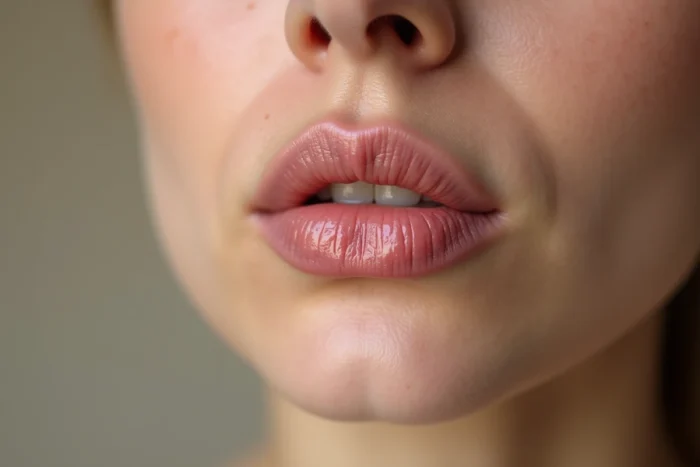
Chapped Lips and Plumping Gloss: An Overlooked Risk Area
The lips do not have a thick stratum corneum like the rest of the face. This anatomical feature makes them more permeable to applied substances and more vulnerable to irritation. Applying a gloss containing menthol, camphor, or chili derivatives on already compromised skin amplifies the reaction.
On chapped lips, the risk of chronic cheilitis significantly increases. Persistent cracks and dehydration worsen instead of resolving, creating a vicious cycle where one reapplies product to “hydrate” lips that the product itself contributes to weakening.
Individuals suffering from atopic dermatitis, eczema, or rosacea have a significantly higher susceptibility to inflammatory or allergic reactions in this area. For these profiles, a plumping gloss can turn a temporary discomfort into lasting inflammation.
Signs That Distinguish Normal Tingling from Abnormal Reactions
- A tingling sensation related to vasodilation (menthol, capsicum) lasts a few minutes and disappears without leaving visible traces beyond slight redness.
- Swelling that persists for more than an hour, accompanied by marked redness or small blisters, indicates an allergic reaction or severe irritation requiring immediate cessation of the product.
- Recurring itching after each application of the same product points to a contact allergy, potentially linked to a specific preservative or fragrance in the formula.
Oral Allergy Syndrome and Flavored Gloss: An Unknown Link
Some tingling or itching of the lips after applying a gloss does not simply result from chemical irritation. Fruit-flavored glosses (apple, red fruits, hazelnut) can trigger what is known as oral allergy syndrome, linked to cross-reactivity between pollen proteins and food flavors.
Specifically, a person allergic to birch pollen may react to a gloss scented with apple or hazelnut. The reaction manifests as tingling, slight swelling, and sometimes a tightening sensation. This mechanism is well documented in food allergy, but rarely mentioned in the context of lip cosmetics.
Field reports vary on the frequency of this phenomenon specifically in the cosmetic context. The available data do not allow for precise quantification of how many reactions attributed to glosses actually fall under this cross-syndrome. The link remains underexplored in studies dedicated to mouth makeup products.

Reading the INCI List of a Gloss: What to Check Before Buying
Rather than banning all plumping glosses, a more useful approach is to learn to spot the ingredients most frequently associated with reactions on the lips. Here are the categories to watch for in the ingredient list:
- Menthol, camphor, capsicum frutescens: vasodilating agents responsible for mechanical tingling. Their presence in the top positions of the list indicates a high concentration.
- Mentions of “fragrance” or “aroma”: no details on individual molecules, making it impossible to identify a specific allergen without dermatological testing.
- Cinnamal, limonene, linalool: common contact allergens, sometimes listed individually when their concentration exceeds a certain regulatory threshold in cosmetics.
- Essential oils (peppermint, cinnamon): potential irritants often perceived as “natural” and therefore harmless, which is misleading for a mucosa as thin as that of the lips.
Testing a new gloss on the inner wrist before applying it to the lips remains a simple reflex. The skin there is thin, and a reaction (redness, itching in the minutes that follow) gives an indication, even if it does not exactly replicate the conditions of the lip mucosa.
The line between a desired plumping effect and an experienced irritation often depends on the state of the skin at the time of application and the concentration of active ingredients. Choosing a lip care product by checking the INCI list and considering one’s own history of skin sensitivity remains the best protection against formulas whose mechanism of action is, by definition, based on a form of controlled irritation.