
Size 42 corresponds to a foot length that varies according to different standards, generally between 26.2 cm and 27 cm. This range places size 42 at the boundary between two sock size ranges for most manufacturers, making the choice less obvious than it seems.
Size 42 and foot length: the gray area between two sock sizes
Size guides display broad ranges (39-42, 42-44, 42-45) that almost always overlap around size 42. The problem is that the shoe size alone is not enough to determine the correct size. Two feet that wear size 42 can measure several millimeters apart in actual length.
A foot measuring around 26.2 cm will fit comfortably in the 39-42 range. Beyond 26.7 cm, a 42-44 or 42-45 range will offer more comfort, especially for prolonged use. Finding tips on size 42 socks with Style Papers helps to better understand these discrepancies according to brands.
To eliminate doubt, the most reliable method remains to measure your bare foot in the evening (the foot swells slightly throughout the day). Place your heel against a wall, mark the tip of your longest toe, and measure the distance in centimeters. This value, more than the size marked in your shoes, determines the appropriate sock range.
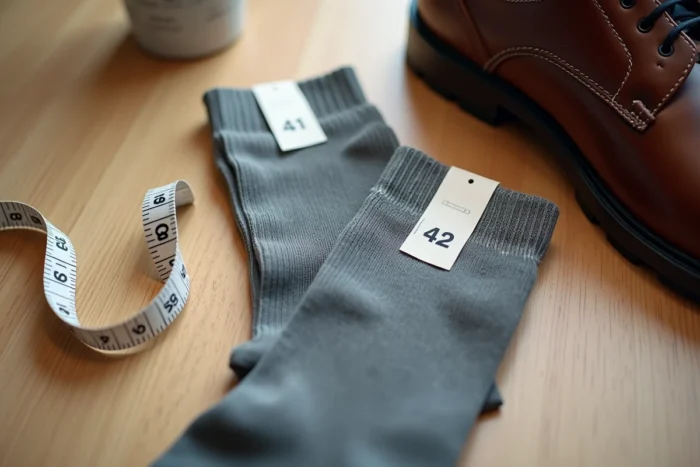
Socks 39-42 or 42-44: criteria for choosing size 42
The common reflex is to take the size that includes your shoe size. For a size 42, both ranges 39-42 and 42-44 are suitable on paper. The right choice depends on three concrete parameters.
Width and volume of the foot
A wide foot or one with a high instep fills the sock more. Choosing the lower range (39-42) in this case compresses the fabric and creates tension at the seams. A wide foot in size 42 benefits from moving to 42-44.
Material and elasticity of the knit
Synthetic fibers (polyamide, elastane) offer a more pronounced elastic return than cotton. A highly elastic sock in 39-42 will adapt better than a thick cotton sock in the same range. Cotton tends to relax after a few hours of wear, which can cause bunching under the arch of the foot.
Intended use
- For daily office use, a fitted sock in 39-42 holds the foot well in a relatively snug dress shoe.
- For hiking or sports, the 42-44 range leaves enough room to accommodate foot swelling during exertion without creating excessive compression.
- For skiing, where the foot is compressed in a rigid shell, a sock that is too large creates folds that cause friction points. The 39-42 range will often be preferable if the foot does not exceed 26.5 cm.
Disparities between brands: why a size 42 does not always fall within the same range
Size ranges vary from one manufacturer to another. Nike offers unisex socks in 38-42 and 42-46, while other brands cut them in 39-42 and 43-46. For the same foot measuring 26.5 cm, the recommendation changes depending on the label.
Nike applies a specific logic when the foot is between two sizes: take the size above rather than the size below. This approach is not universal. Some compression sock manufacturers, on the contrary, recommend a tight fit to ensure the effectiveness of graduated compression.
The practical consequence is simple: relying solely on the mention “size M” or “size L” without checking the associated size range often leads to an error. An “M” from one brand covers 39-42, while from another it covers 40-43. Reading the size chart on the packaging or product sheet remains the only reliable way to avoid a bad purchase.
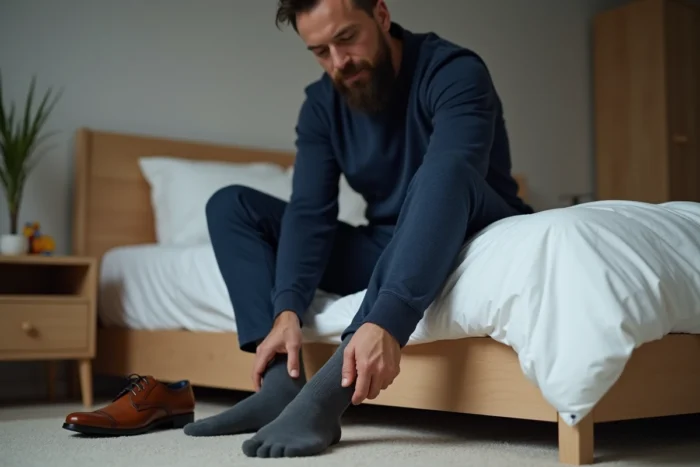
Concrete signs of a poorly sized sock for a size 42 foot
A sock that is too small is quickly noticeable: the heel rides up towards the ankle while walking, the fabric pulls on the toes, and the toe seam presses on the tops of the toes. In the medium term, these repeated frictions cause blisters, particularly on the little toe and heel.
A sock that is too large poses other problems. The excess fabric creates folds under the foot, visible inside the shoe. These folds concentrate pressure on small areas of the sole. The folds under the arch of the foot are the primary cause of discomfort related to an oversized sock.
A quick test allows you to check the fit: put on the sock, stand up, and then gently pull the fabric at the toe. If more than one centimeter of fabric extends beyond the longest toe, the sock is too large. If the toes are compressed and the fabric appears tight with no give, it is too small.
Summary table of common ranges for size 42
| Size range | Indicative foot length | Suitable for size 42 |
|---|---|---|
| 39-42 | Up to about 26.5 cm | Narrow to standard foot, city use |
| 42-44 / 42-45 | Beyond 26.5 cm | Wide foot, sports, hiking |
| 38-42 (some sports brands) | Up to about 26.5 cm | Check the manufacturer’s chart |
| 42-46 (some sports brands) | Beyond 26.5 cm | Risk of excess fabric if foot is short |
The common point among all these ranges: measuring the foot in centimeters is more decisive than the shoe size. A size 42 with a foot measuring 26.2 cm and a size 42 with a foot measuring 27 cm will not wear the same sock size, even if their shoe size is identical. Taking thirty seconds to measure your foot avoids unnecessary returns and blisters.