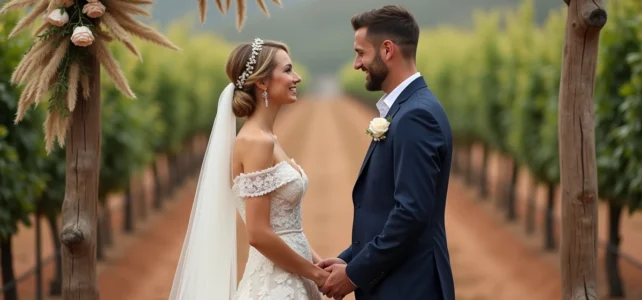
A wedding is first defined by the structuring choices that precede the celebration: the number of guests, the type of ceremony, and the reception venue. These three parameters condition the budget, the atmosphere, and the degree of personalization possible. Before thinking about decoration or entertainment, understanding their interactions avoids painful compromises midway through.
Guest count and reception format: the parameter that conditions the entire wedding
The number of guests is rarely treated as a design variable. Guides reduce it to a line in the budget spreadsheet. Yet it determines the style of the venue, the type of entertainment, and the degree of intimacy of the entire day.
A wedding with fewer than fifty people allows for formats that large tables prohibit: shared meals with family around a single table, ceremonies in a private garden, participatory activities where each guest has a role. Beyond one hundred guests, logistics impose additional service providers (sound system, in-room service, coordination) and the cost per person rises, which reduces the margin for personalizing other items.
Setting the guest count first, even before visiting a venue, allows for filtering realistic options. A couple hesitating between a castle and a village hall is actually making a decision about the number of people they wish to gather. Many frustrations related to wedding planning stem from this step, which is treated too quickly or postponed due to family diplomacy.
Specialized resources like nuptialement.fr allow for exploring inspirations suited to each format, from intimate weddings to large receptions.
Personalized ceremony: building a ritual that reflects the couple
The civil ceremony at the town hall lasts about fifteen minutes and leaves little room for personalization. The secular ceremony, organized as a complement or symbolic replacement, offers a free framework to integrate texts, rituals, and interventions from loved ones.
Symbolic rituals to incorporate into a secular ceremony
Several formats exist, each carrying a different meaning:
- The tied hands ritual, inherited from Celtic tradition, involves tying the couple’s hands with a ribbon whose color symbolizes a wish (red for passion, blue for sincerity, green for prosperity).
- Planting a tree, done together during the ceremony, materializes the union through a living being that will grow with the couple.
- The sand ritual, where each partner pours sand of a different color into the same vase, creates a unique pattern that cannot be separated.
The secular officiant does not have legal status in France, but their role as master of ceremonies structures the entire event. Choosing a loved one as officiant enhances the emotion and gives a tone that standardized ceremonies do not replicate.
Multicultural weddings: merging traditions
Weddings that blend multiple cultures are a strong trend. Incorporating two languages into the vows, offering a menu that combines two cuisines, or alternating two musical styles during the evening transforms the reception into a family narrative.
This approach requires more extensive coordination work (translation, adaptation of dishes, management of dress codes), but produces ceremonies that guests describe as the most memorable of their experience.
Decoration and visual style: choices that change the atmosphere of the wedding
Decoration is not limited to centerpieces. It starts with a coherent artistic direction: color palette, dominant materials, relationship between the venue and added elements.
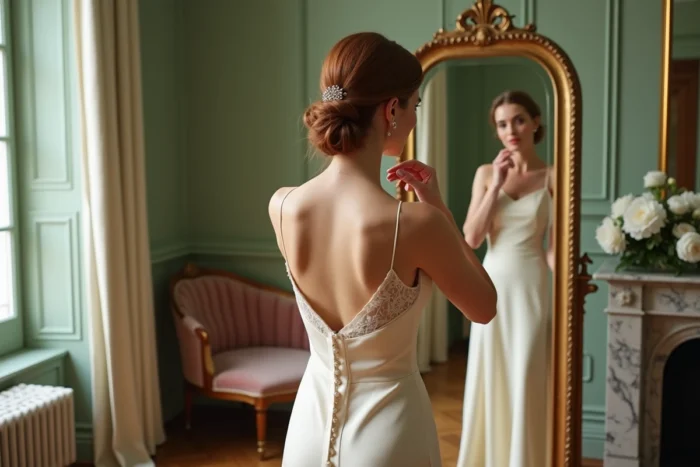
Colored wedding dresses disrupt the visual code of the entire ceremony. Blush, lavender, emerald green: these shades, identified as strong trends for the upcoming seasons according to Smakk’s analysis, modify the overall palette of the wedding. A lavender dress calls for floral decoration different from a classic white dress, and the photographic ensemble gains in uniqueness.
For the reception, three principles avoid a catalog effect:
- Limit the palette to a maximum of three colors, including one dominant and two accents.
- Favor a common material (raw wood, brass, ceramics) used across several supports rather than multiplying textures.
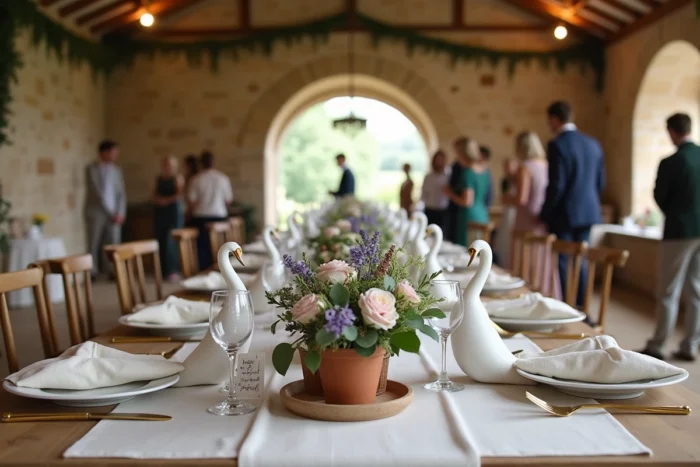
- Adapt the decoration to the existing venue rather than masking it: a dry stone estate does not require the same elements as a contemporary hall.
Wedding budget: balancing between items without sacrificing personalization
The budget is divided between non-negotiable items (venue, catering, attire) and adjustable items (decoration, entertainment, stationery). The caterer and the venue absorb the majority of the total budget, often more than half combined.
Reducing the guest count mechanically frees up budget on these two items, allowing for reinvestment in personalization: a secular ceremony officiant, a live music group instead of a DJ, a photo session in a secondary location.
The common mistake is to set the overall budget without prioritizing the items. A couple who values the reception venue may accept simple stationery. A couple passionate about gastronomy will reduce decoration in favor of the menu. Defining two priority items from the start structures subsequent decisions and avoids the frustration of imposed compromises.
The most often underestimated item remains coordination on the day itself. Whether it’s a professional organizer or a designated loved one, having a dedicated person for the schedule frees the couple from logistics and preserves what makes the day memorable: their actual presence with their guests.